Lemon-Dill Salmon with Quinoa & Asparagus
This Lemon-Dill Salmon with Quinoa & Asparagus is a wholesome, vibrant dish that showcases the tender, flaky perfection of salmon paired with the earthy tones of quinoa and the crisp bite of asparagus. Perfect for any season, it's a nutritious meal that brings the taste of fresh coastal air to your table.
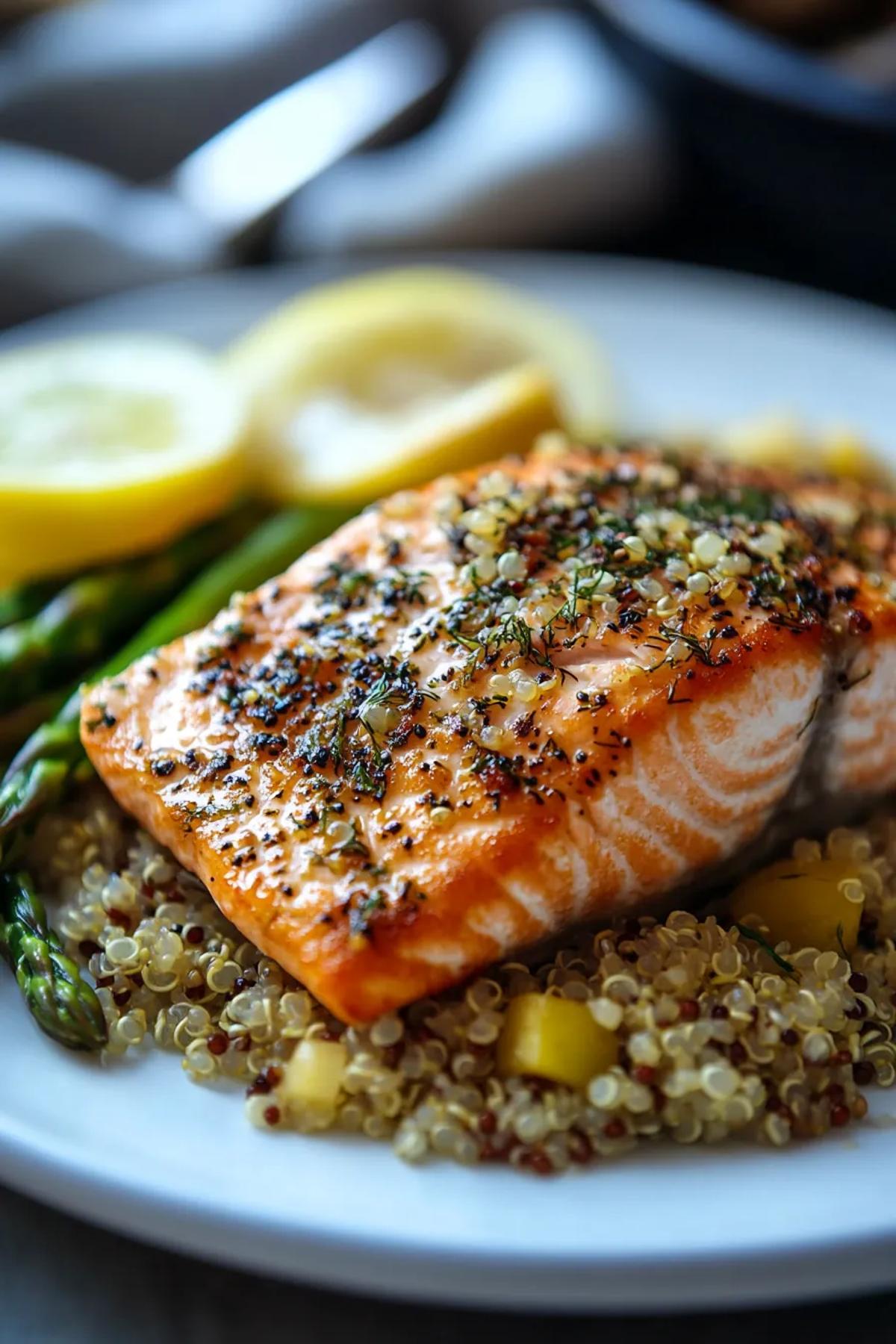
Table of Contents
Salmon has always been one of my go-to ingredients when I crave something healthy yet indulgent. The inspiration for this Lemon-Dill Salmon dish came from a sunny afternoon spent at the local farmer's market. I was captivated by the fresh dill's fragrance and the vibrant bundles of asparagus, which immediately sparked the idea of pairing them with a beautiful fillet of salmon. This dish evokes memories of seaside dinners, where the air is filled with the aroma of the ocean and fresh herbs. It's a dish that not only satisfies the palate but also nourishes the soul. Pair it with our [Chilled Cucumber Soup](/recipes/chilled-cucumber-soup) for a refreshing start or enjoy it alongside a slice of [Homemade Sourdough](/recipes/homemade-sourdough) for a heartier meal.
Chef's Technique
One of the key techniques in making a flawless salmon dish is mastering the art of pan-searing. The secret lies in starting with a hot pan and a little olive oil. When the oil is shimmering, the salmon is placed skin-side down, ensuring the skin becomes crispy while the flesh remains moist. The heat should be reduced slightly to allow the salmon to cook evenly without burning the skin. This method locks in the flavor and creates a delightful contrast between the crispy exterior and the tender interior. Additionally, cooking the salmon with a lid for a few minutes helps to steam it gently, preserving its moisture and enhancing the infusion of dill and lemon. This technique not only showcases the salmon's natural flavors but also elevates the texture to a restaurant-quality experience.
Testing Tip
To ensure your salmon is cooked to perfection, use an instant-read thermometer. Insert it into the thickest part of the fillet, and it should read 145°F (63°C) for perfectly cooked salmon. If you prefer it slightly rare, aim for 125°F (52°C). For those new to cooking salmon, remember that its color changes from a translucent red to an opaque pink as it cooks, providing a visual cue. Additionally, pressing lightly with a fork should cause the flesh to flake apart easily, indicating doneness. Always let the salmon rest for a few minutes off the heat; this allows the juices to redistribute, ensuring every bite is succulent and flavorful.
Why You'll Love This Recipe
- Rich in omega-3 fatty acids, this salmon dish is heart-healthy.
- The lemon and dill create a fresh, zesty flavor profile.
- Quinoa adds a protein-packed, gluten-free base.
- Asparagus provides a seasonal, nutritious vegetable component.
- Quick and easy, it's perfect for a weeknight dinner.
Frequently Asked Questions
Yes, frozen salmon works well. Just ensure it's fully thawed in the refrigerator before cooking for even results.
Brown rice, couscous, or farro are excellent alternatives that offer a similar texture and nutritional profile.
Store cooked salmon in an airtight container in the refrigerator for up to 3 days. Reheat gently to avoid drying it out.
If dill isn't available, fresh parsley or tarragon can provide a similar herbal freshness.
Serving Suggestions
This Lemon-Dill Salmon pairs beautifully with a light, crisp white wine such as Sauvignon Blanc, which complements the citrus and herbal notes. Serve alongside a simple side salad with vinaigrette to enhance the meal's freshness. For a more robust dinner, add a side of roasted sweet potatoes or our delightful [Garlic Mashed Potatoes](/recipes/garlic-mashed-potatoes) for a comforting touch.
Expert Tips
- Tip:To ensure your salmon is cooked to perfection, use an instant-read thermometer. Insert it into the thickest part of the fillet, and it should read 145°F (63°C) for perfectly cooked salmon. If you prefer it slightly rare, aim for 125°F (52°C). For those new to cooking salmon, remember that its color changes from a translucent red to an opaque pink as it cooks, providing a visual cue. Additionally, pressing lightly with a fork should cause the flesh to flake apart easily, indicating doneness. Always let the salmon rest for a few minutes off the heat; this allows the juices to redistribute, ensuring every bite is succulent and flavorful.
Creative Variations
For a spicy twist, add a pinch of red pepper flakes to the salmon before searing. If you're a fan of citrus, try incorporating orange zest with the lemon for a sweeter fragrance. For a Mediterranean flair, sprinkle some capers over the finished dish and serve with a side of olives. You could also make a creamy dill sauce by mixing Greek yogurt with dill, lemon juice, and a touch of garlic for a refreshing topping.
Storage & Reheating
To store, place any leftover salmon in a shallow container and refrigerate promptly. It keeps well for up to 3 days. When reheating, do so gently in a skillet over low heat or in the oven at 300°F (150°C) to maintain its moisture. Avoid using the microwave, as it can dry out the fish. If reheating quinoa, add a splash of water or broth to keep it fluffy.
Final Thoughts
Lemon-Dill Salmon with Quinoa & Asparagus
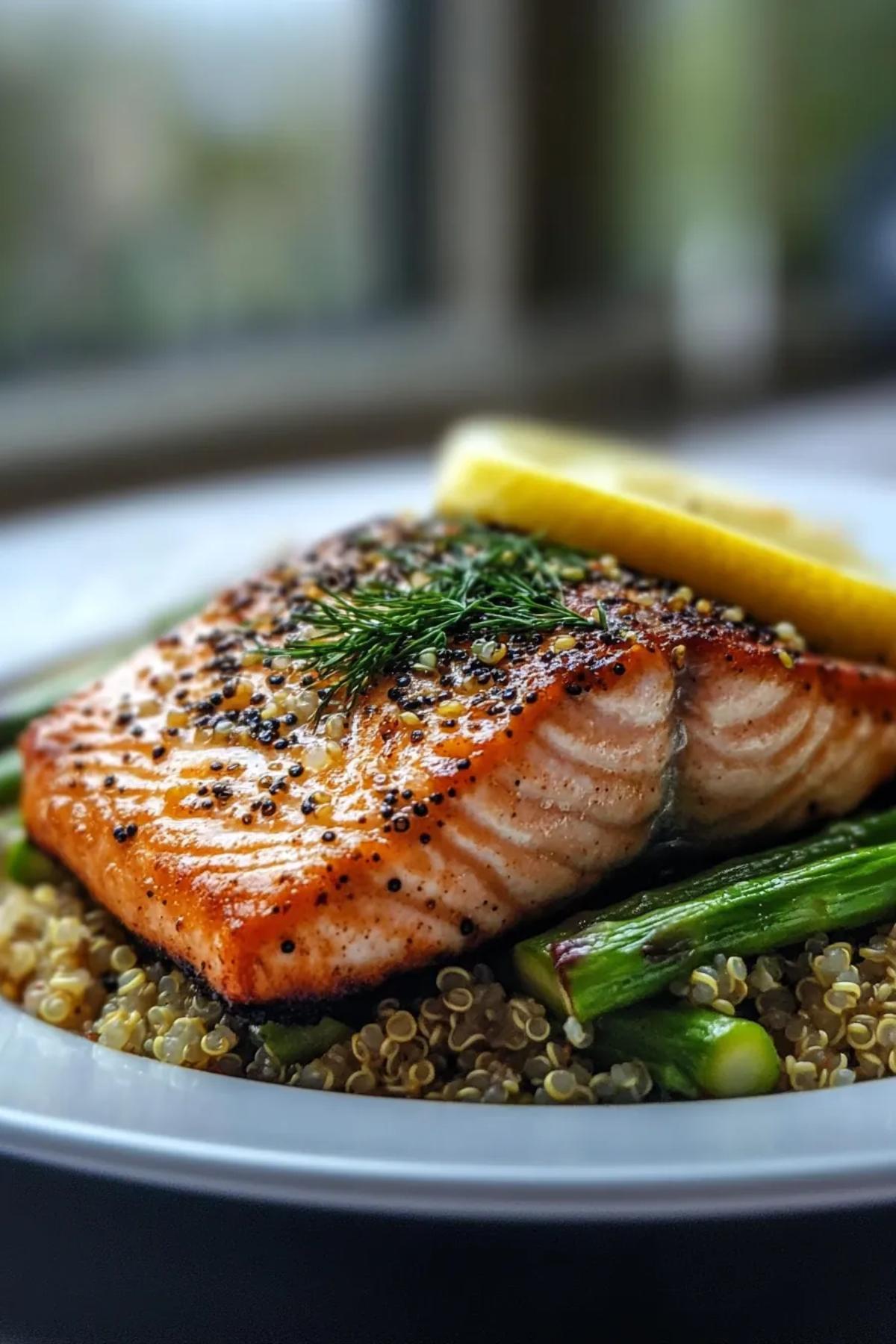
This Lemon-Dill Salmon with Quinoa & Asparagus is a wholesome, vibrant dish that showcases the tender, flaky perfection of salmon paired with the earthy tones of quinoa and the crisp bite of asparagus. Perfect for any season, it's a nutritious meal that brings the taste of fresh coastal air to your table.
Ingredients
Ingredients
Instructions
Preparation
Prepare the quinoa
Rinse the quinoa under cold water to remove any bitterness. In a medium saucepan, bring 2 cups of water or chicken broth to a boil. Add the quinoa, reduce the heat to low, cover, and simmer for about 15 minutes or until the liquid is absorbed and the quinoa is fluffy. Fluff with a fork and set aside.
Prep the asparagus
While the quinoa is cooking, trim the asparagus by snapping off the woody ends. Toss with a little olive oil, salt, and pepper. Set aside.
Cooking
Sear the salmon
Heat a large non-stick skillet over medium-high heat and add 2 tablespoons of olive oil. When the oil is shimmering, place the salmon fillets skin-side down. Cook without moving for 4-5 minutes, until the skin is crispy and the flesh is opaque about halfway up the sides. Flip the fillets gently and cook for another 2-3 minutes until just cooked through. Remove from the pan and let rest.
Cook the asparagus
In the same pan, add the asparagus and cook for 3-4 minutes, stirring occasionally, until tender and lightly charred. Season with more salt and pepper if needed.
Finishing Touches
Assemble the dish
On each plate, place a generous serving of quinoa. Top with a salmon fillet, and arrange the asparagus spears alongside. Drizzle with fresh lemon juice and sprinkle with lemon zest and chopped dill.
Serve and enjoy
Serve immediately while warm. Enjoy the vibrant flavors and textures of this healthy, satisfying meal.
Tools Needed
- Chef's Knife
- Cutting Board
Allergy Info
Please check all ingredients for potential allergens. Always consult a professional for specific dietary concerns.